Strategy & Prototype · ESG · Mobility

Next-gen mobility,
designed for India's RRTS.

— Client
NCRTC (via BCG)
— Practice
Strategy + Prototype
— Sector
Mobility · ESG
— Engagement
Project
01 / Introduction

The Regional Rapid Transit System is one of India's most ambitious mobility infrastructure projects. A multi-thousand-crore programme to compress travel time between cities and lift the commuter experience to international standards.

In partnership with BCG, we were asked to design the digital front door. Not a ticketing app. The travel companion that sits between a citizen and the system.

02 / The brief
i. What the system needed

Handle millions of users across cities with varied tech fluency. Translate routes, stations, luggage, and safety into elegant digital pathways. Serve citizens and system administrators in one product. Drive revenue contextually — without breaking trust or interrupting a journey.

03 / The approach
i. One-click ticketing

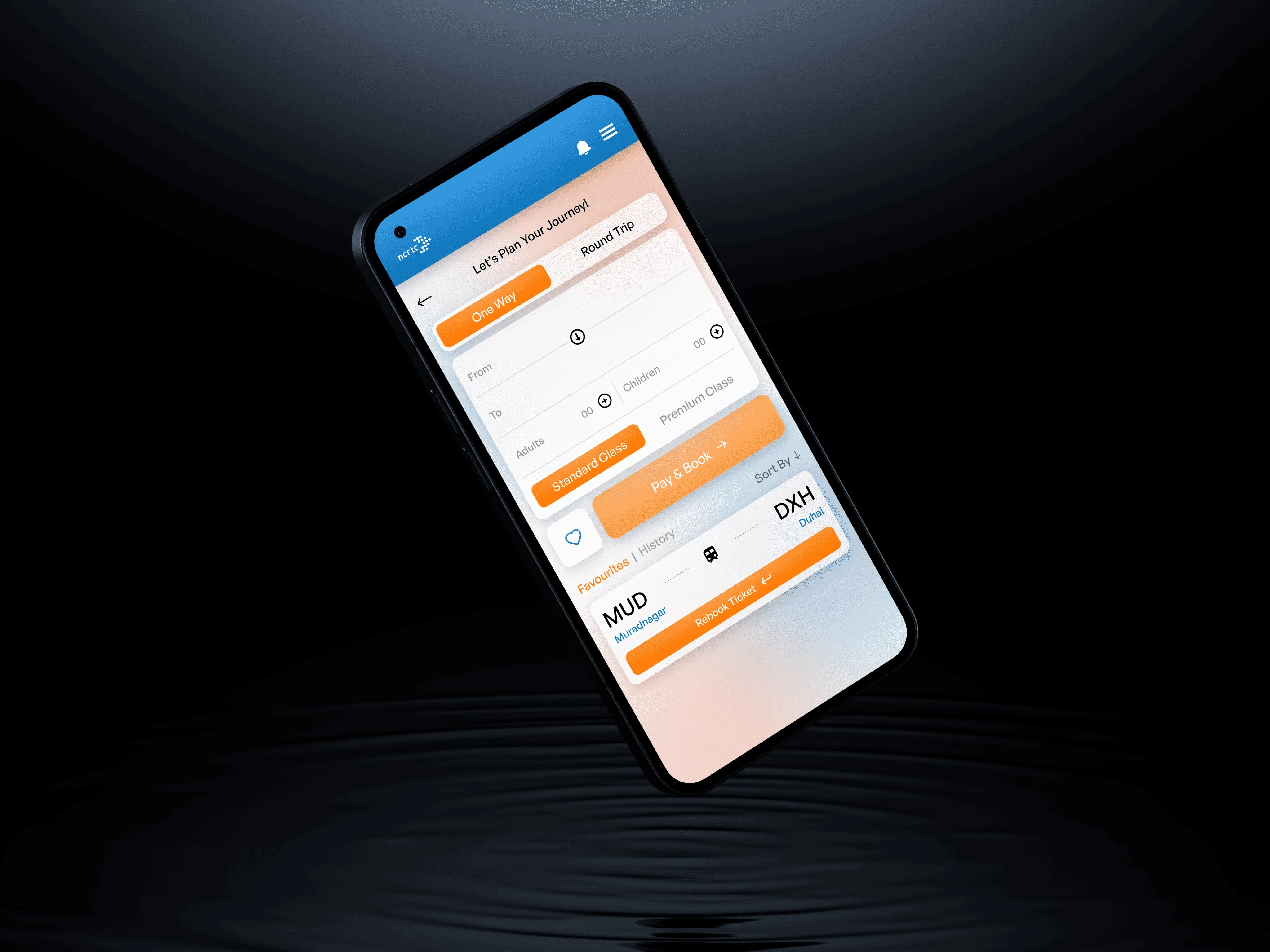
UPI-based purchase flow — minimal queue time, minimal app friction. The simplest possible motion for the highest-frequency action.

ii. AR for orientation

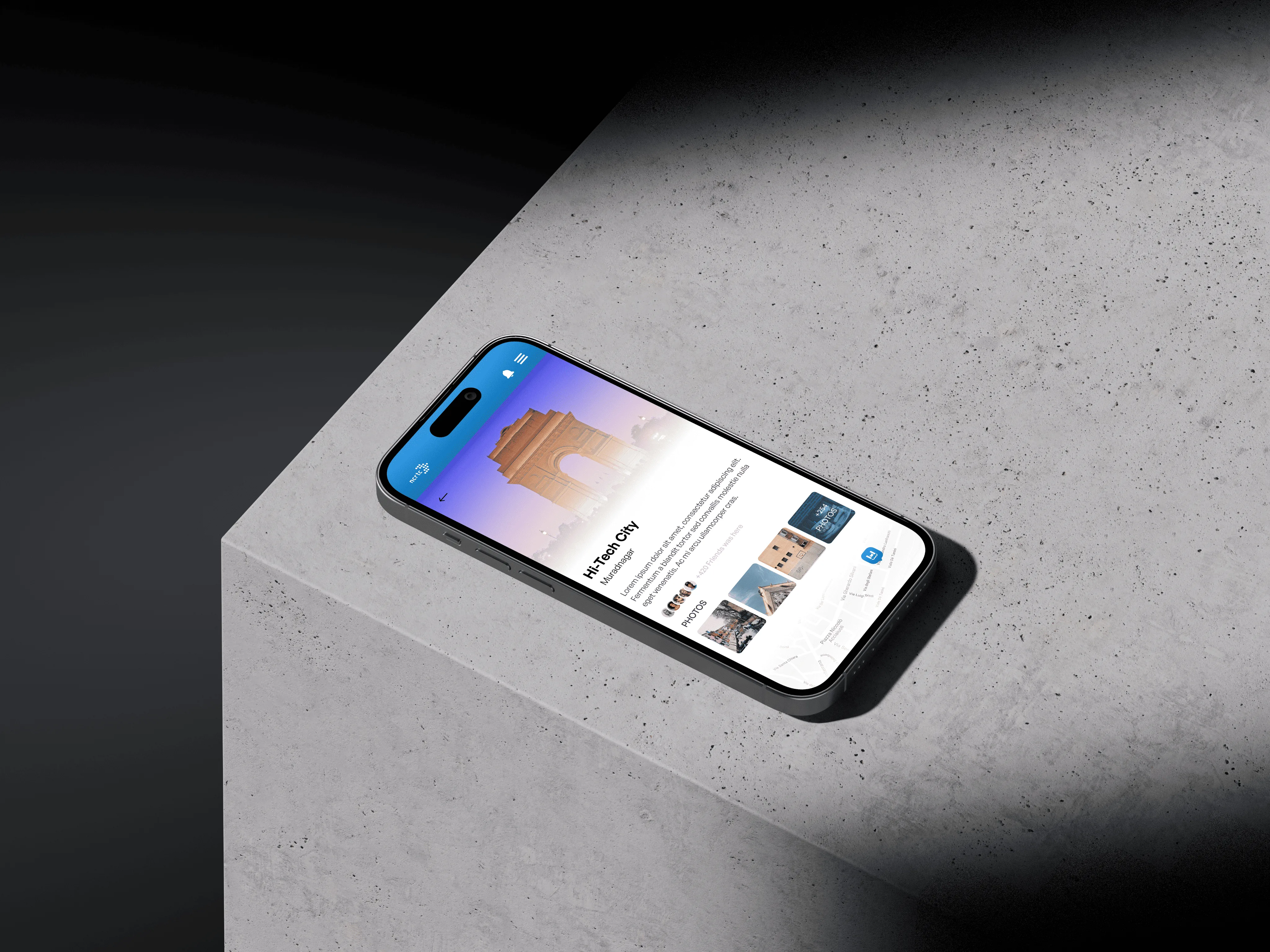
Augmented reality station guidance for first-time users and tourists — no signage stress, no missed platforms.

iii. In-journey services

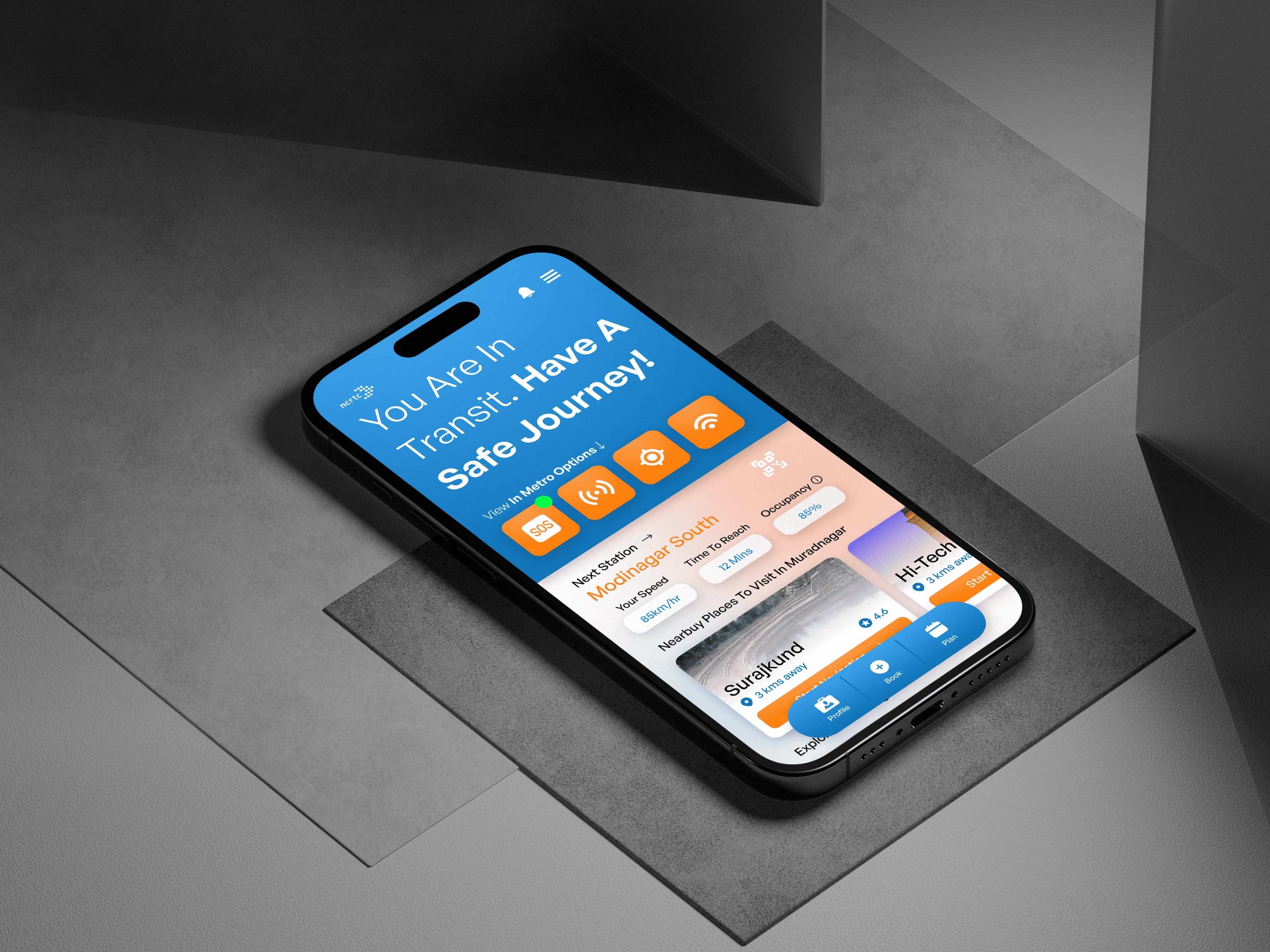
Air quality, SOS, luggage tracking, WiFi access — layered into the journey timeline as utility, not feature creep. A smart cabin around the rider, not a dashboard above them.
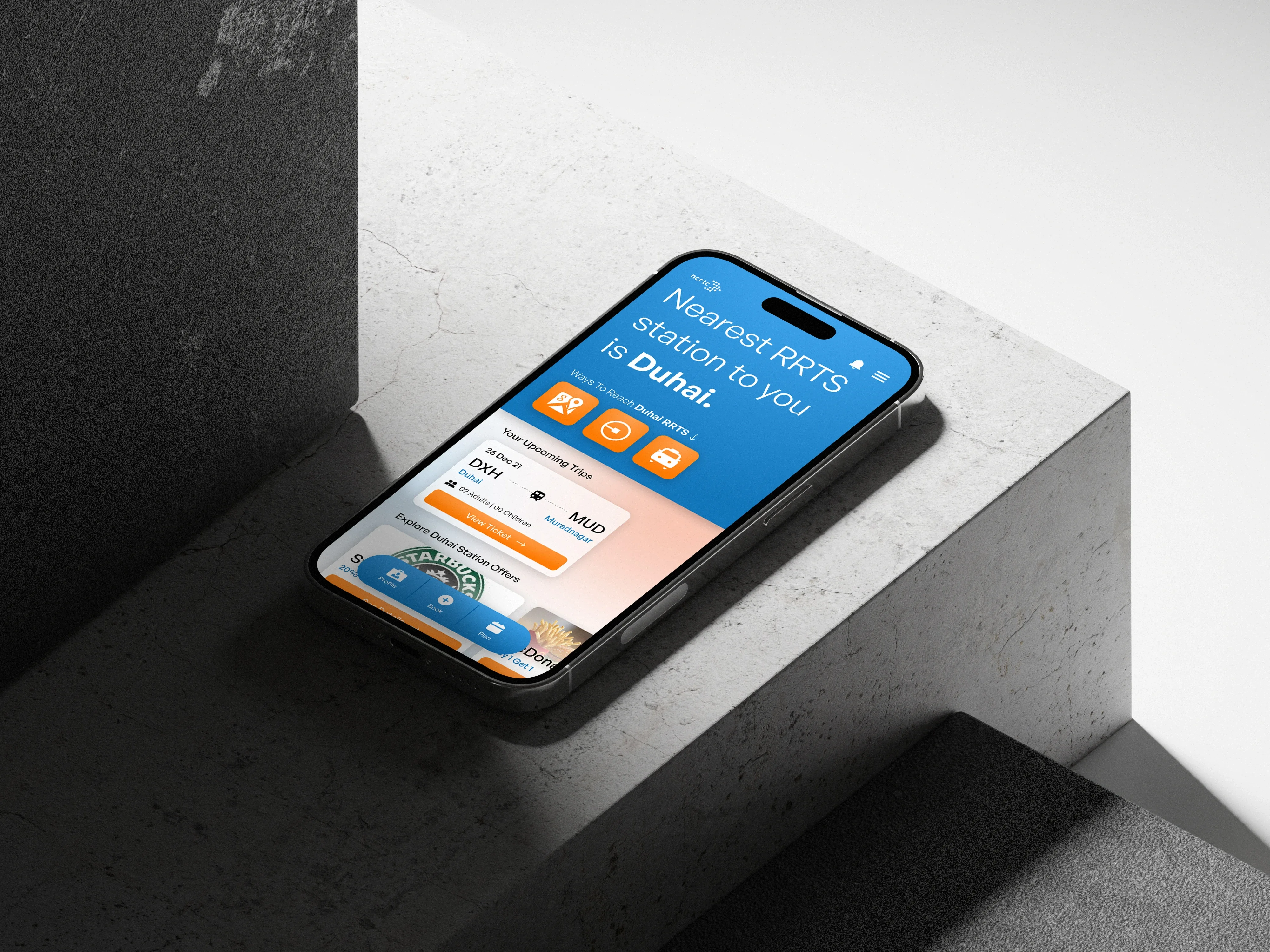
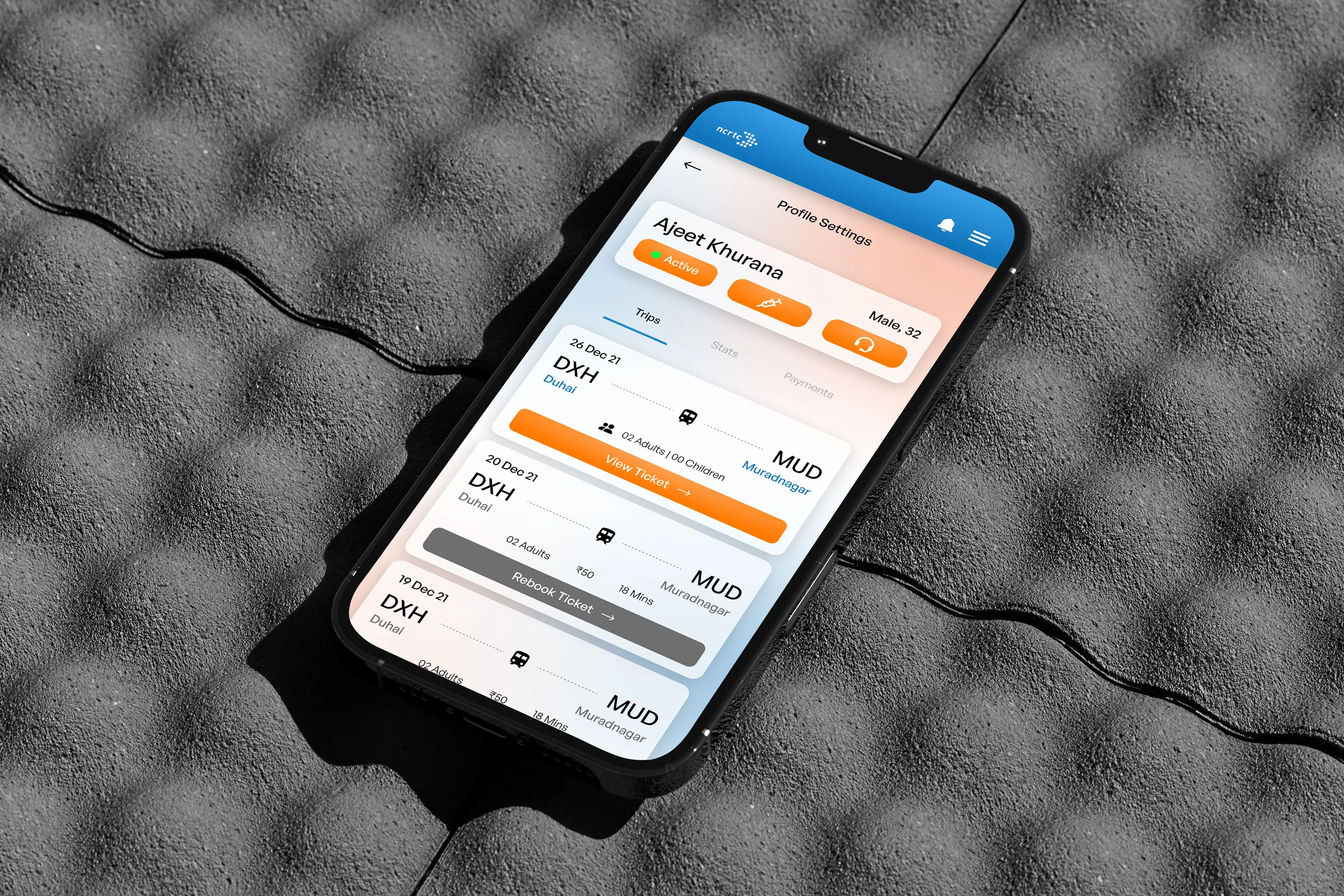
RRTS — Next-gen mobility surface 01
RRTS — Next-gen mobility surface 02
RRTS — Next-gen mobility surface 03
RRTS — Next-gen mobility surface 04
RRTS — Next-gen mobility surface 05
iv. Monetisation without intrusion

Food coupons, dynamic attraction pricing, contextual upsells — embedded in the journey rather than sold against it. The commercial layer reads as service rather than advertising.

v. Admin intelligence underneath

Backend dashboards for NCRTC operations — user patterns, revenue segmentation, context-aware updates pushed by location and history. The product works for the rider; the system works for the operator.

04 / The outcome
i. What changed

What started as a ticketing tool became a travel ecosystem. Real-time monetisation models turned station lobbies into economic environments. The backend gave NCRTC the analytics it needed to make service decisions in cycles instead of seasons.

The work sits as a reference for the next wave of public mobility design in India.

1
Digital front door
to the network
m+
Riders the system
was built for
2
Audiences served
in one product
— Start here

Some of our best projects
started with a two-line email.

Send yours